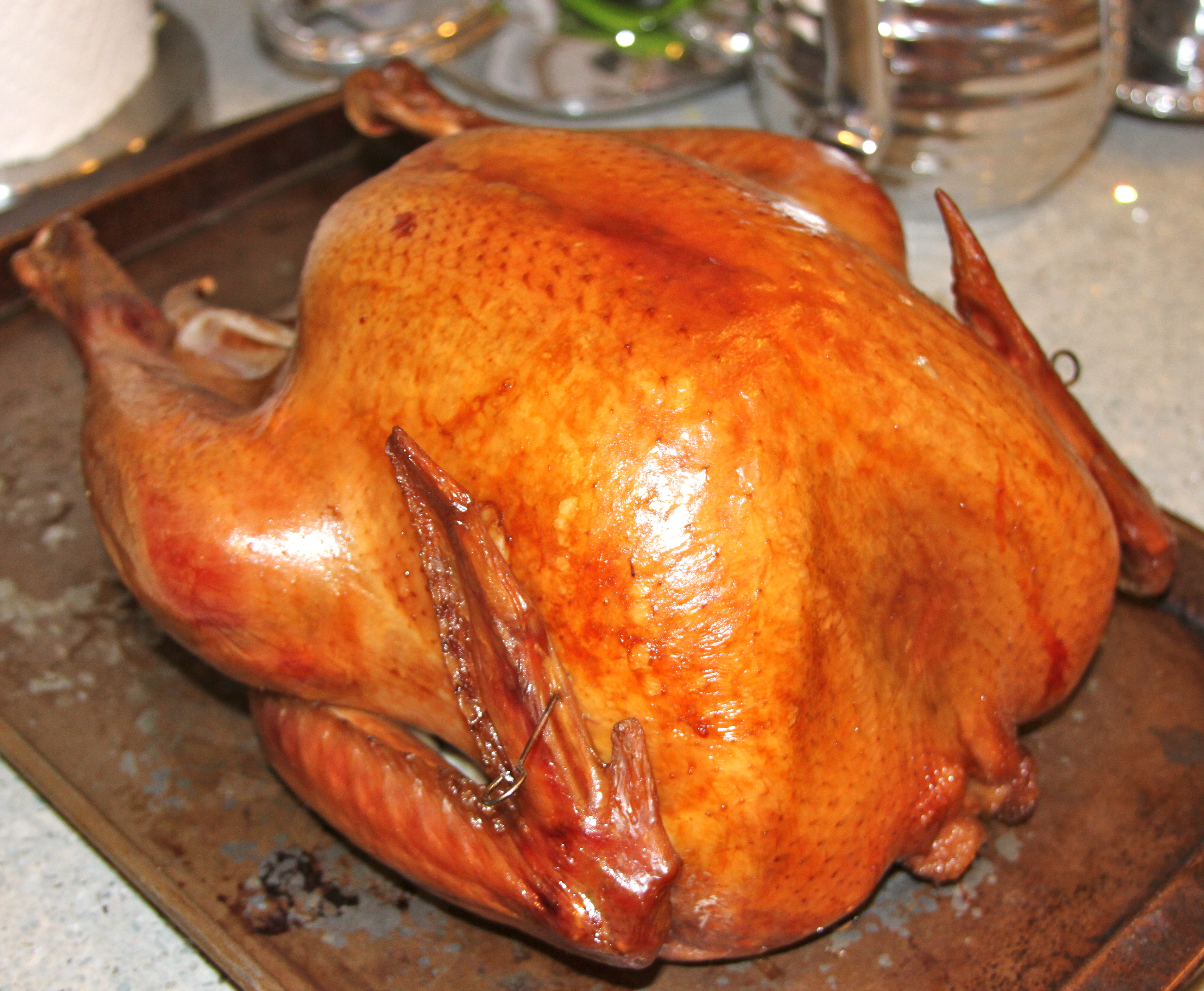
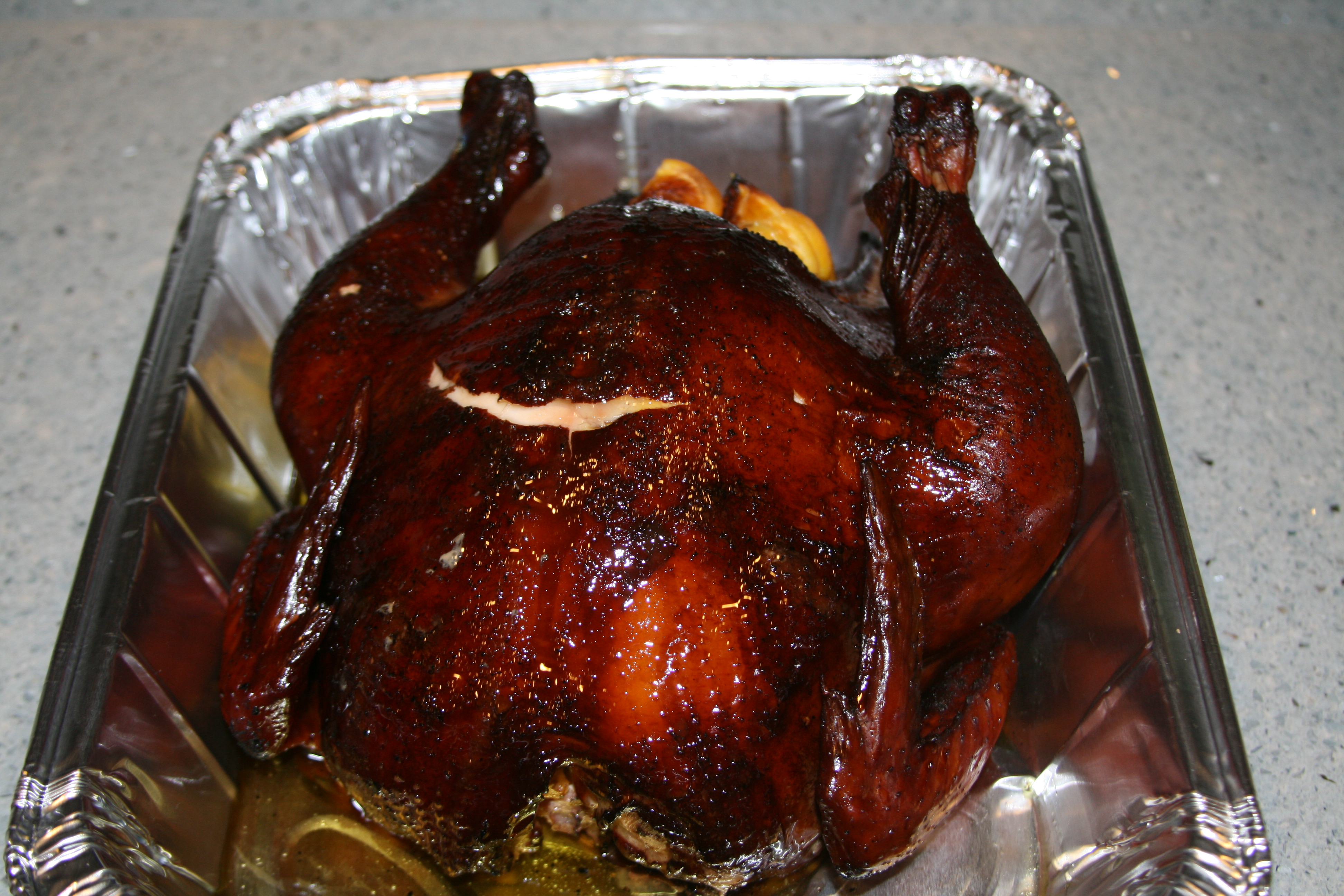
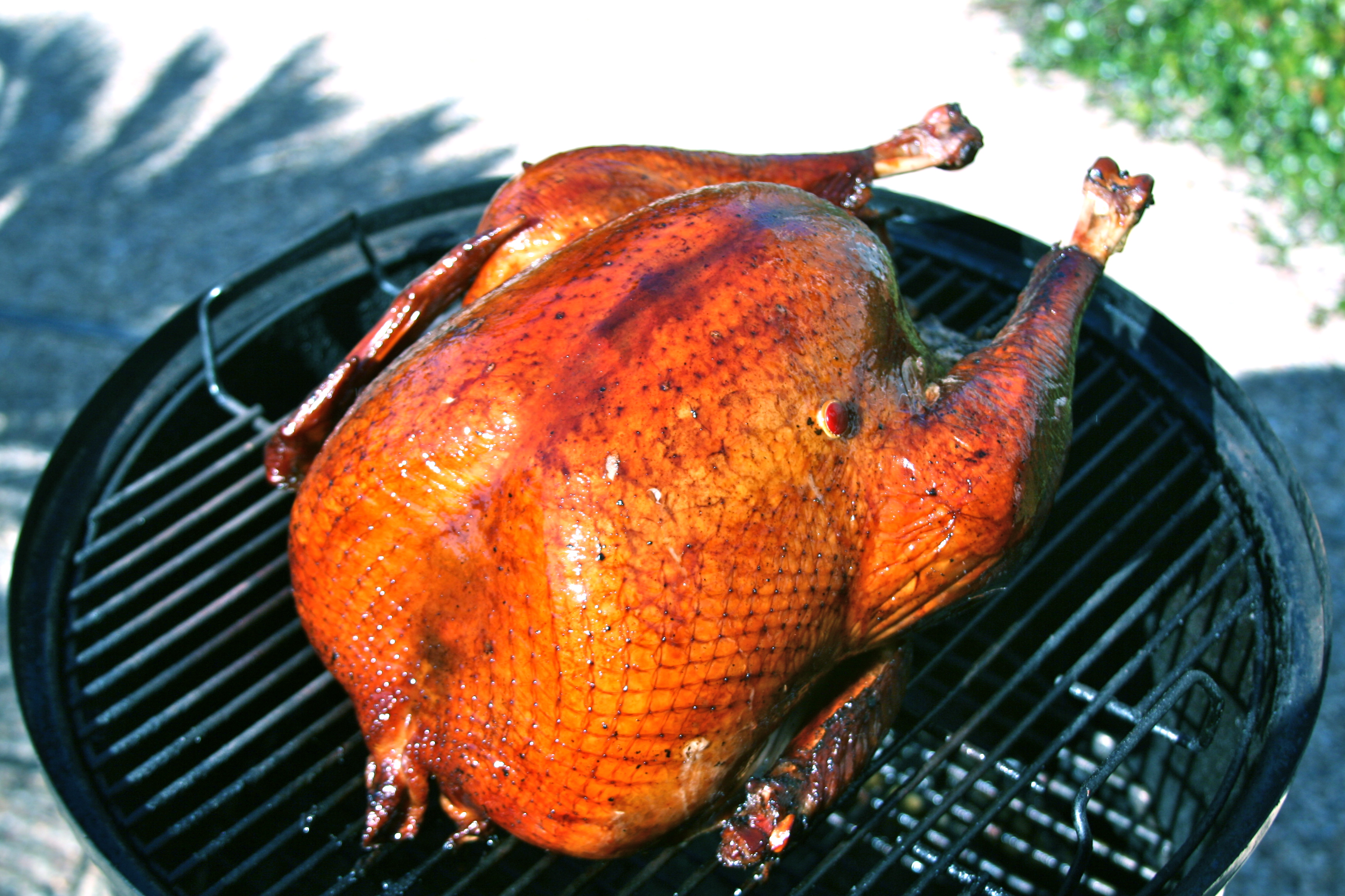
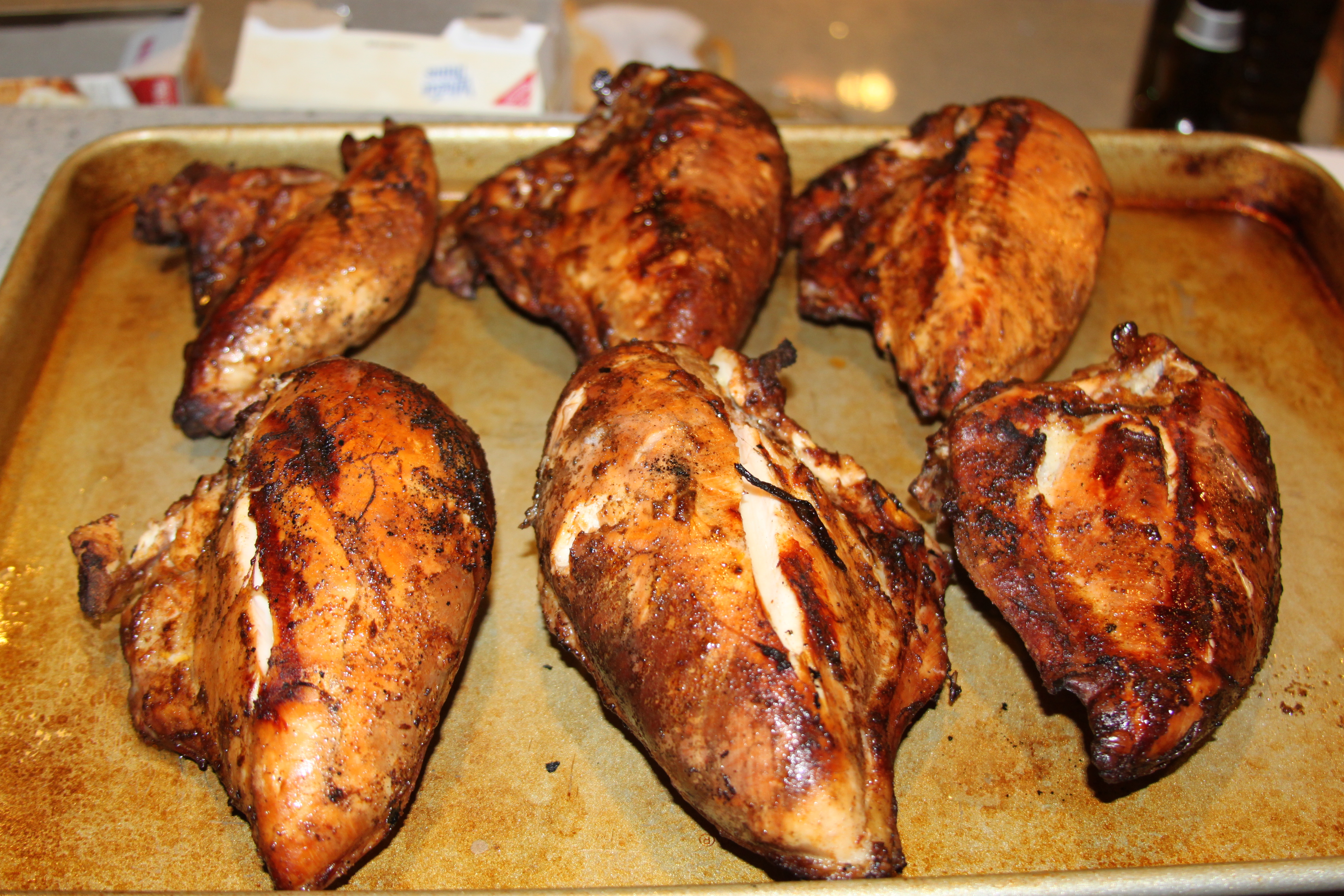
This baby was brined for 36 hours using the recipe in last year’s Thanksgiving post. It was smoked yesterday for seven hours over Kingfsford and lump charcoal. Dried hickory nuts soaked in water and were added every few hours for a subtle, but tasty, smoked flavor. I basted the bird twice with olive oil.
Category Archives: Uncategorized
The Perfect Bird???
Filed under Uncategorized
Best BBQ Joints?
Now we are touchin’ some nerves and ruffling’ feathers!!!
This year I have been to College BBQ in Salisbury, NC, Charlie’s Piggin n’ Grinnin’ in Benton Harbor, MI and the Salt Lick in Driftwood, TX. This Saturday I am going to Nat Hayden’s Real Pit BBQ in Windsor, CT. Stay tuned to hear which one is the best!
11/13/2010
Well I guess I lied! We never made to Nat Hayden’s last Saturday night. Hayden’s doesn’t have any TV’s and we wanted to watch college football. Alas…why not the Buffalo Wild Wings right next to the hotel? TV’s were everywhere and the wings were tasty, as were the ribs. The ribs were a bit sweet and lacking a smoked flavor, but were tender and moist nevertheless.
Back to the other three joints…The Salt Lick is a place with a definite Hill Country of Texas flair and ambiance located in Driftwood–it is exactly what a BBQ place in Texas should be. While the sides were only so, so, the ribs were absolutely to die for, and certainly among the best I have tasted. The brisket is outstanding as well. When in Austin, make the trip to Driftwood, and remember to BYOB!
College BBQ has been in Salisbury, NC for a number of years. It is favorite of the locals, including one of the original owners of Food Lion, a large grocery store chain. My first visit there was for breakfast with my Dad and his wife Nettie. Wow was the country ham excellent, especially when accompanied by two eggs over easy and grits! And how can you beat the aroma of pork shoulder cooking slowly over hickory wood?
During my last trip to Salisbury, my Dad picked up a bunch of pulled pork, pepper slaw, and hush puppies. BBQ manna from heaven? I didn’t roam the desert with Moses or Charlton Heston for 40 years so I can’t say for sure, but this stuff is awesome and rivals the pulled pork from Lexington BBQ. That is quite a testimonial!
Charlie of Benton Harbor is a member of the Kansas City BBQ Society, which is the biggest organization of its type with some 13,000 members, including me. He has won a number of KC BBQ Society contests and has the trophies in his restaurant to prove it. I had a great time getting to know Charlie, and enjoying his pulled pork sandwiches. His pulled pork is right there with College BBQ’s!
In a society which believes “everyone deserves a trophy” picking a sole winner is tough. Plus, the guys from the prog rock band Rush said, “if you choose not to decide, you still have made choice.” Now, to decide how to prepare the beef tenderloin which just came out of the garage freezer…
Filed under Uncategorized
“BBQ may not be a religion in Texas, but the two institutions are closely associated.” – Robb Walsh
Oh crap! I have a bunch of very tasty rubbed and smoked ribs from last weekend and don’t want to throw them away. I looked all over the web for ideas on recycling these delectable things, but didn’t find anything exciting. The least original idea included step-by-step instructions on re-heating ribs in the microwave. Wow, I didn’t know Saran Wrap was so versatile (insert sarcastic groan)! From Yahoo Answers I read: “You can heat it up and serve with rice. You can make burritos with the meat. BBQ sandwiches.” This is very unoriginal, too, but inquiring minds really do need to know if the rice has to be leftover to make the recipe right.
Suddenly I was overwhelmed by revelation! My inner soul whispered (somehow sounded like the narrator on “Christmas Story”–poor Ralphie!), “WWK”, or what would Kurt do? Kurt is our “over the road” neighbor (Scottish parlance for “across the street”). Our families enjoy occasional Sunday night cookouts, pool activities and card games. While I always smoke ribs, Kurt prefers to brown them on the grill, then cook them in BBQ sauce in the crock pot. His ribs are very mouth watering and tender, but I have always considered doing ribs in the crock pot to be sacrilege, or even sacreligious. Robb Walsh, former food writer of the “Houston Press”, whose famous quote is the title of this BLOG post, would be absolutely horrified at the BBQ blasphemy!
After a quick prayer and a “Hail Mary” to the BBQ and Smoker gods, I pulled out the crock pot. I cut the ribs into small portions and put them put in the ‘pot with a bottle of Sweet Baby Ray’s Sweet ‘n Spicy BBQ sauce. I added some other BBQ sauces and a bottle of Shiner light to make sure the ribs were covered. The mixture has been cooking on low for a few hours and the aroma is incredible!
More news at 10:00 PM…

Filed under Uncategorized
Santa Maria Tri-Tip
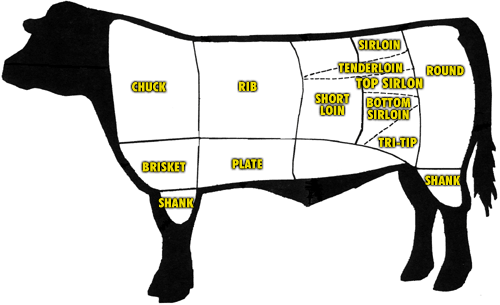
Tri-tip is a cut of beef from the bottom sirloin (see picture). It is a small triangular muscle, usually 1.5 to 2.5 lbs. per side of beef. You rarely (pardon the pun) hear of it outside of the west coast, although in New York city it may be called “Newport steak”. In my hometown of plain old Plano, TX you can find it only at few places such as Central Market or Hirsch’s Meat Market, and, of course, at my favorite store, Costco. BBQ Buddy Lee and I have had several tri-tip cook offs over the years, using a marinade recipe from Lee’s Reno friend Jim Riggen, who happens to be a real world McGyver, both in the garage and in the kitchen. The marinade (and baste) is a mixture of sliced purple onion, Teriyaki sauce, olive oil and brown rice vinegar. After spending 12 or more hours marinading, the beef is cooked over indirect heat on the Weber Kettle Grill or in the Weber Smoker.
The original US tri-tip recipe was created in Santa Maria, California, and named accordingly. In fact, it is alleged the town’s Chamber of Commerce has copyrighted the recipe. In its most basic form a rub comprised of salt, pepper and garlic powder is used, and the meat is cooked over red oak. I found a recipe for Grilled Santa Maria Tri-Tip on About.com which is much more involved, but turned out to be a a dead ringer! It calls for these ingredients:
2 to 2 1/2 lb beef tri-tip roast
1 tablespoon fresh ground black pepper
2 teaspoons salt
1/2 tablespoon paprika
1 teaspoon garlic powder
1 teaspoon onion powder
1 teaspoon dried rosemary
1/4 teaspoon cayenne pepper
1/2 tsp Dijon mustard
1/3 cup red wine vinegar
1/3 cup oil oil
4 cloves crushed garlic
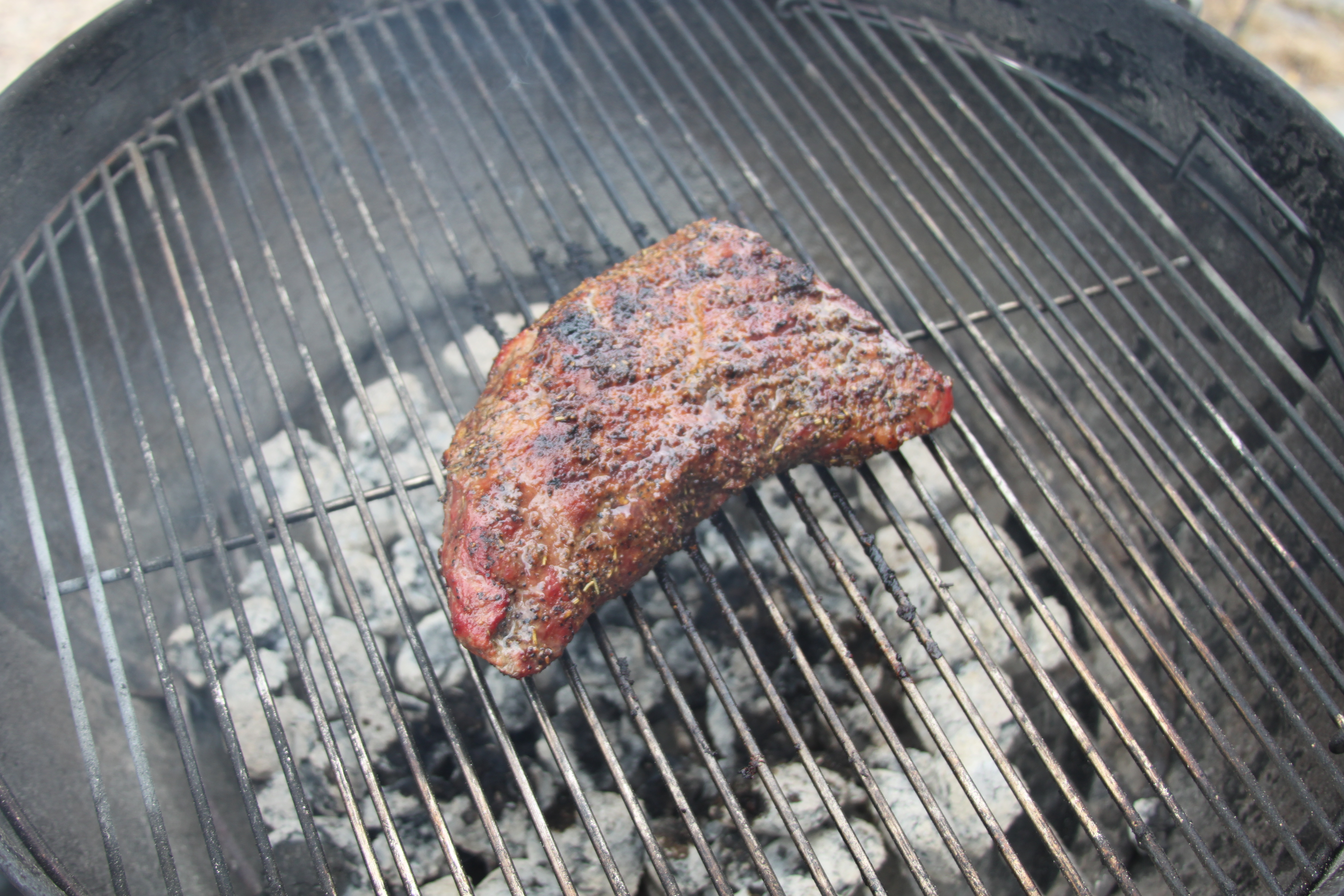
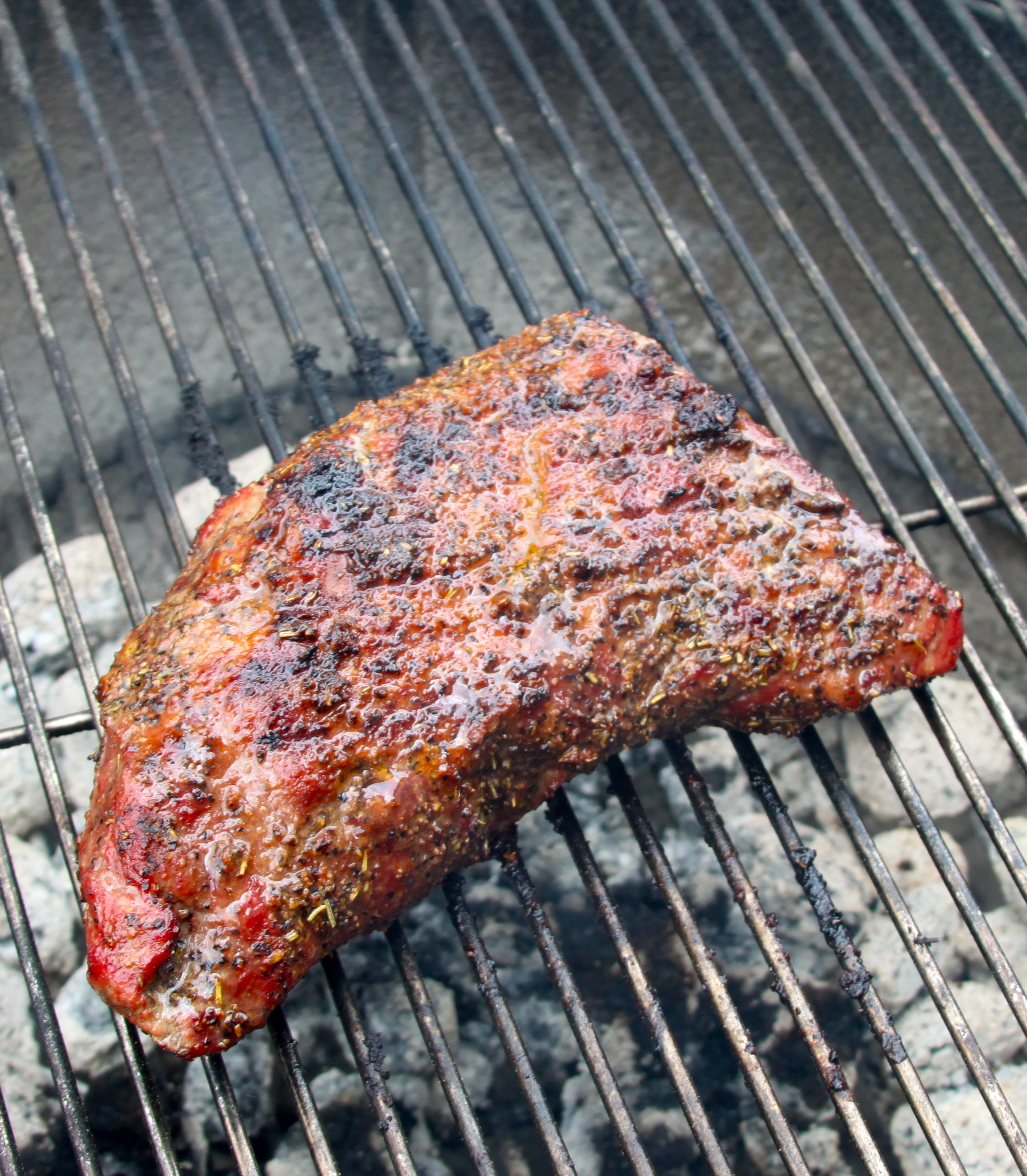
I used Hungarian Hot Paprika in lieu of the garden variety and deli mustard instead of Dijon. Olive oil was substituted for vegetable oil. Preparation began with combining the black pepper, salt, paprika, garlic powder, onion powder, rosemary, and cayenne in a small bowl. This mixture was then rubbed on to all surfaces of the tri-tip, and the meat was refrigerated for 3 hours. The meat was removed and given 30 minutes to warm to room temperature.
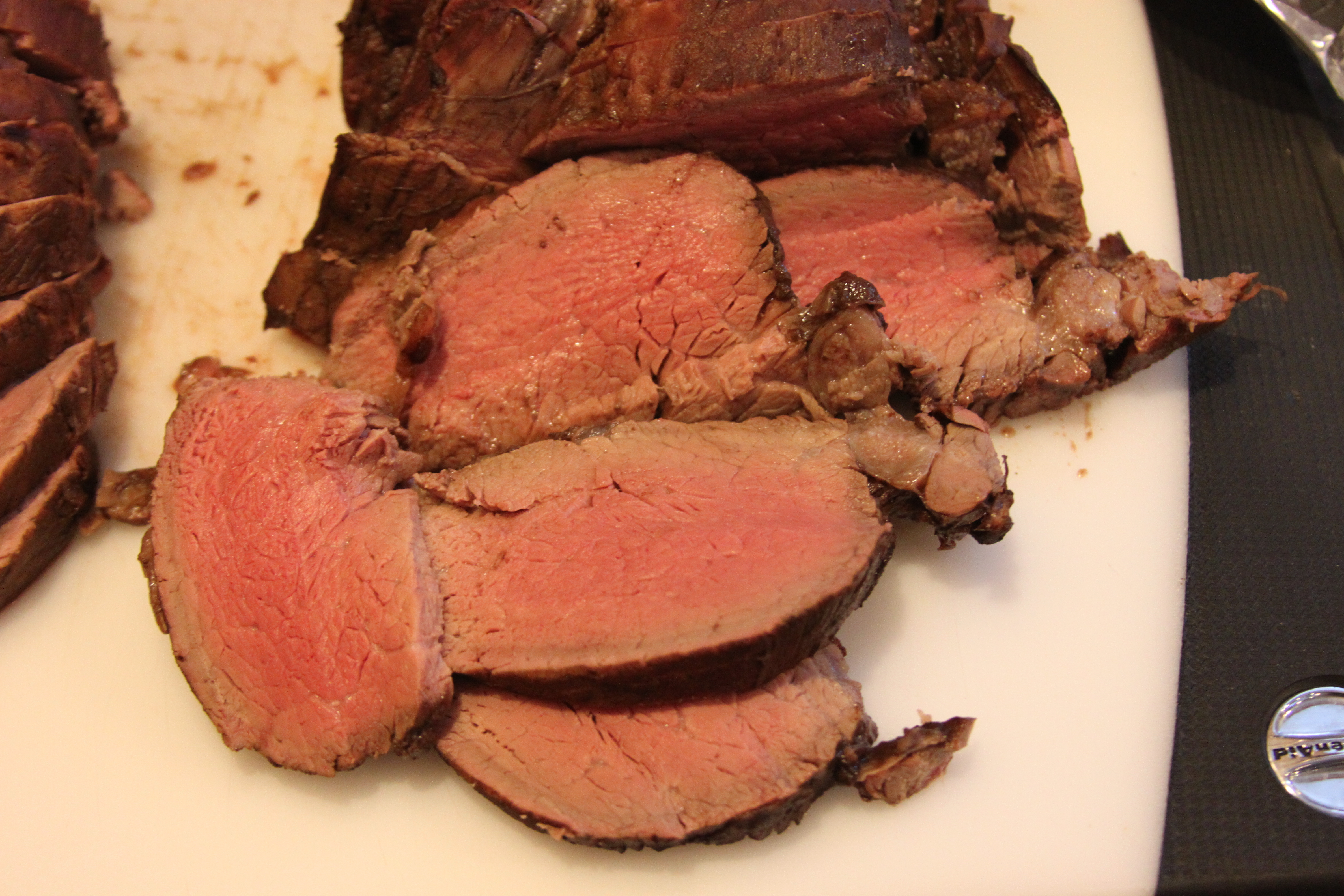
For the baste the mustard, vinegar, olive oil, and crushed garlic were put into a jar with a lid and shaken vigorously until emulsified. The Weber Kettle Grill was fired up with lump charcoal. Once the coals were ashen white, the meat was placed on the grill and coated with a mixture of olive oil and red wine vinegar. The meat was grilled for a total of 30 minutes to medium rare (135 degrees). Every 3-4 minutes it was basted. After resting for 30 minutes the meat was cut into thin slices.
All BLOGged Out?
It has been a while since I have posted, but certainly not a result of resting the grills or being otherwise lazy. I have been repeating some recipes lately, and doing some basic stuff like BBQ’d chicken and burgers.
With old friends in town it was my time to demonstrate grilling prowess, or, in the worst case, look like uncooked cabrito (an inside joke). Failure wasn’t an option so I endeavored to create a convergence of distinct flavors, without overemphasizing any one of them individually. Turkey breast has a wide appeal and is lean, but it seldom done with a sweet flavor for some unknown reason. Defying convention, I rubbed a Butterball young turkey breast the night before with John Henry’s Sugar Maple Rub Season which is heavy with sugar and brown sugar (I like brown sugar better since it doesn’t caramelize as quickly as refined sugar). I hit it again Saturday morning when it came out of the ‘frig to warm to near room temperature.
As turkey lay on the counter in wait of heat and smoke, I loaded up the side rails of the trusty Weber Kettle Grill with lump charcoal. Lump charcoal has a more distinct flavor than briquets, but not excessively strong like straight mesquite or oak. I put in more charcoal than normal since I needed four hours of steady heat and lump charcoal burns faster the briquets.
A little history on charcoal courtesy of Wikipedia:
Charcoal is the black residue consisting of impure carbon obtained by removing water and other volatile constituents from animal and vegetation substances. Charcoal is usually produced by slow pyrolysis, the heating of wood, sugar, bone char, or other substances in the absence of oxygen (see pyrolysis, char and biochar). The resulting soft, brittle, lightweight, black, porous material resembles coal and is 50% to 95% carbon with the remainder consisting of volatile chemicals and ash. The charcoal briquette was first invented and patented by Ellsworth B. A. Zwoyer of Pennsylvania in 1897 and was produced by the Zwoyer Fuel Company. The process was further popularized by Henry Ford, who used wood and sawdust byproducts from automobile fabrication as a feedstock. Ford Charcoal went on to become the Kingsford Company.
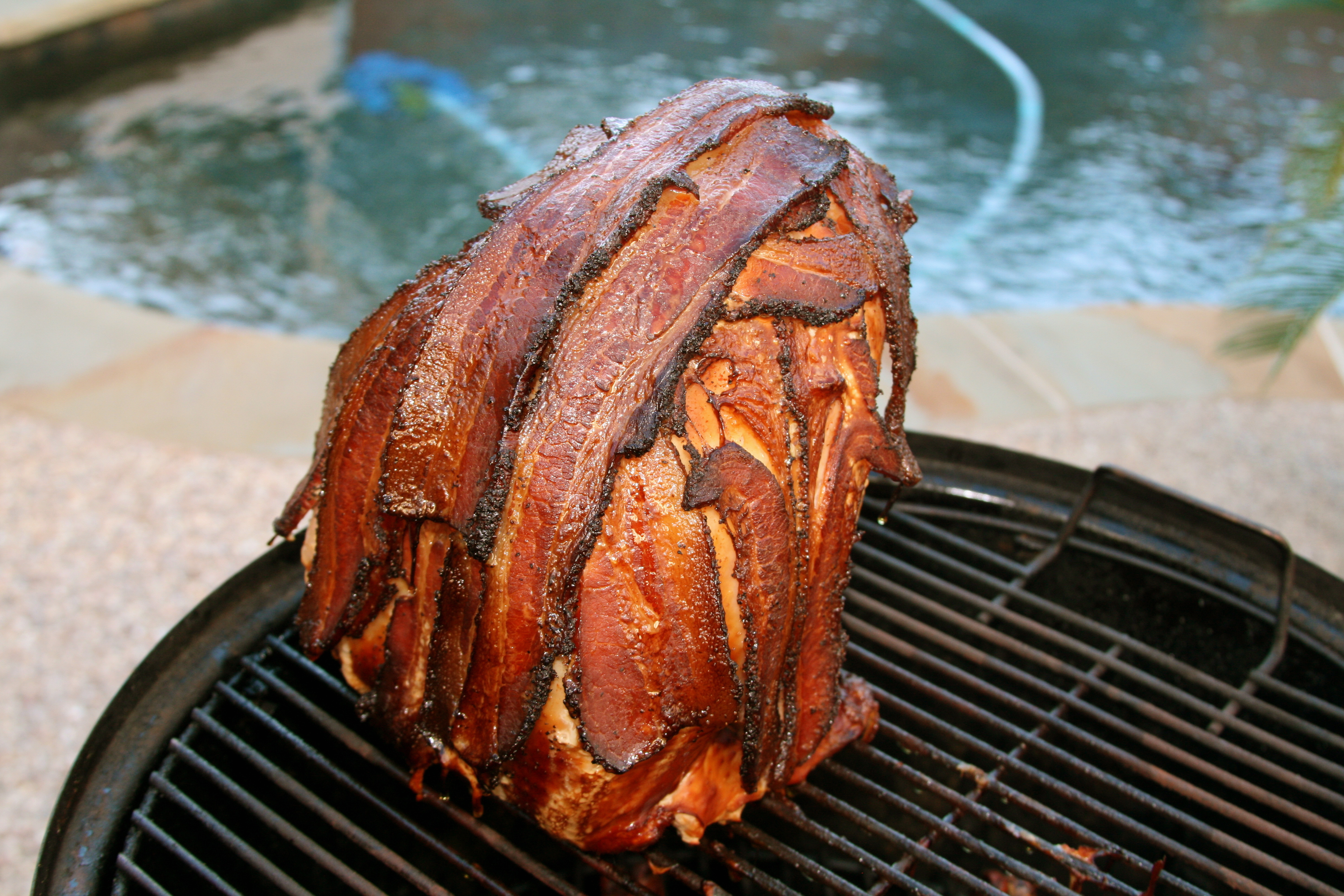
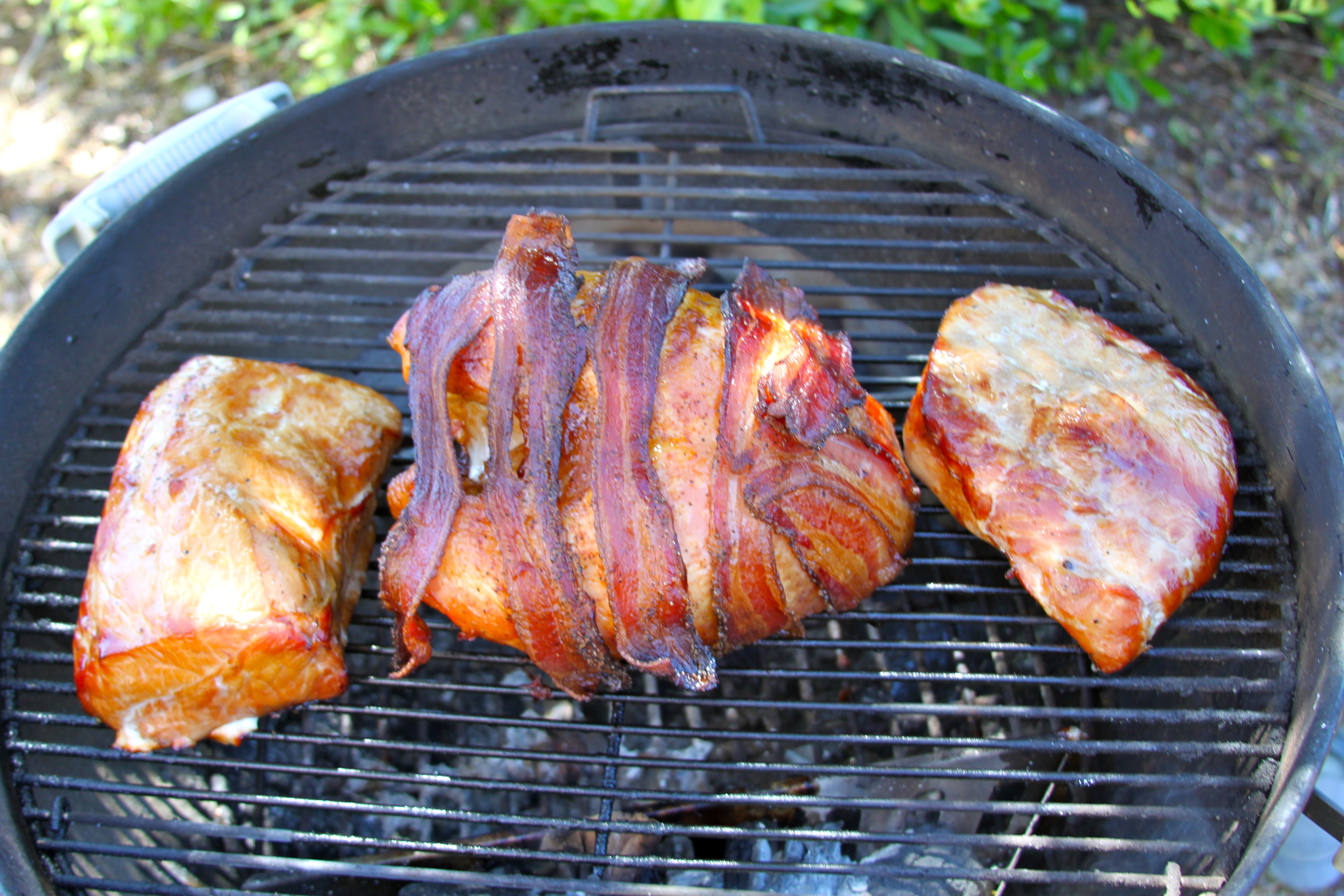
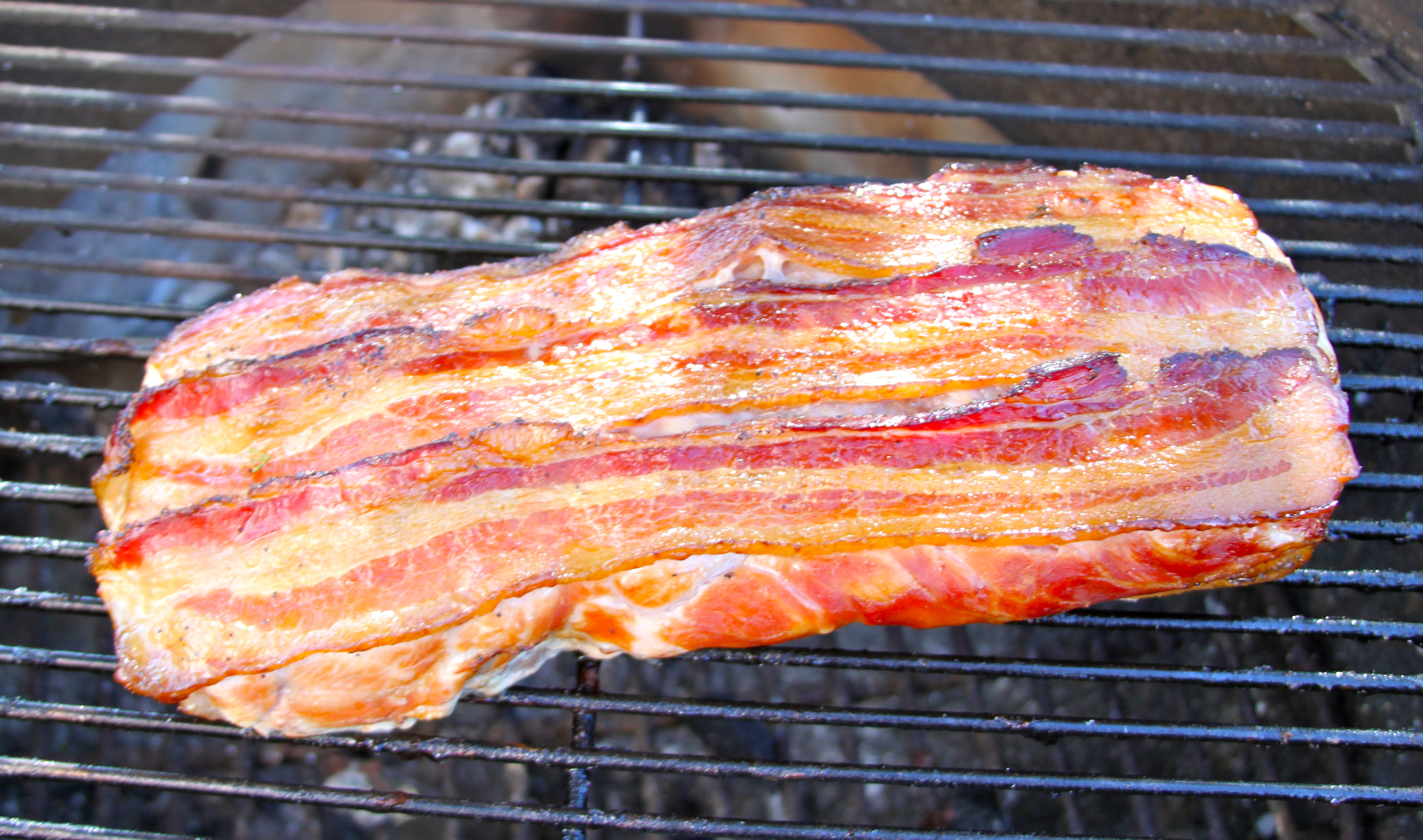
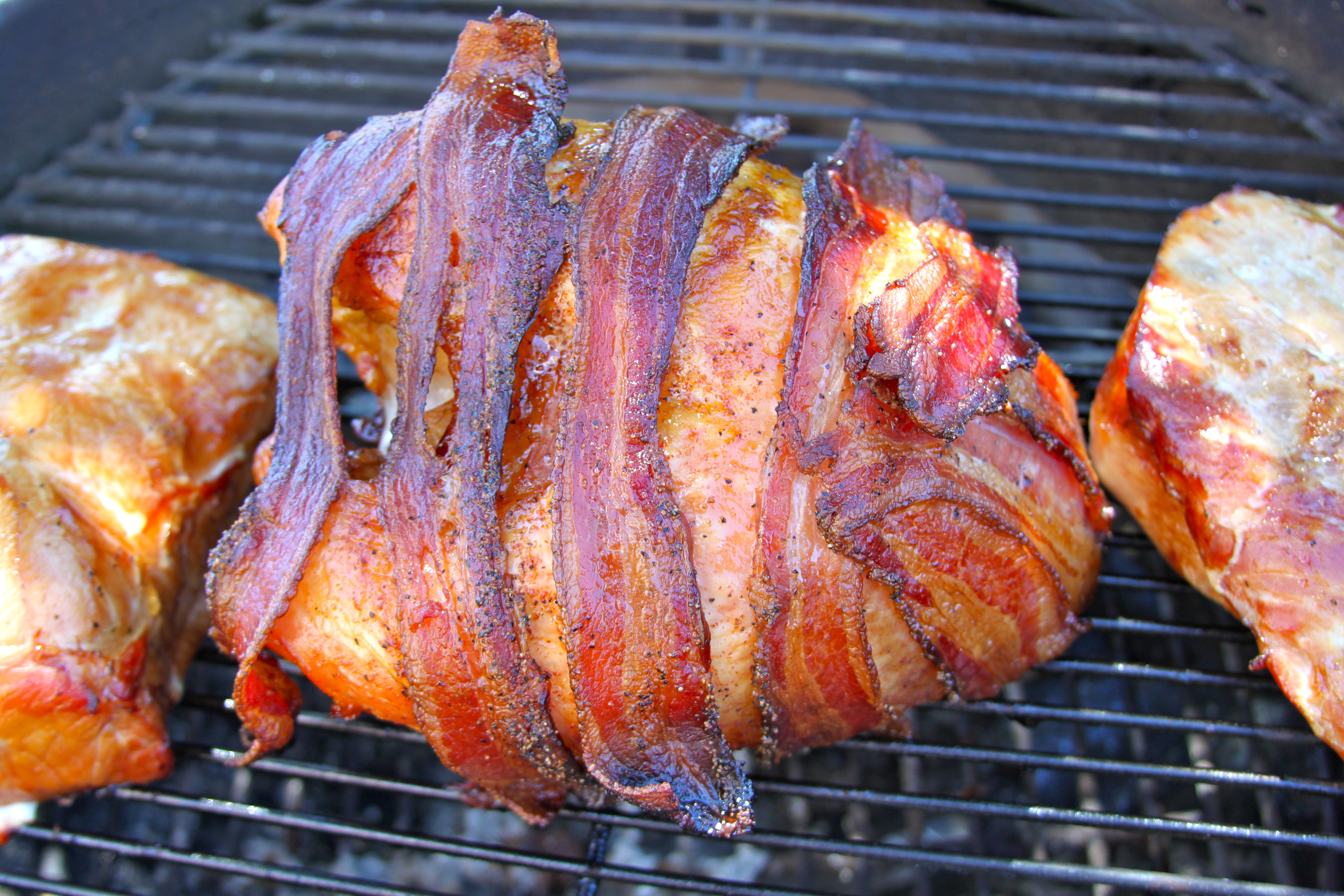
In about 45 minutes, and with the help of my new battery powered yard blower, the coals were ready. I put the turkey breast on center grill, and for the other chosen flavoring, covered it in thick, peppered bacon. Coffee wood, the final ingredient, is great for adding a mild smoked flavor. Several chunks were placed on the lump charcoal burning in the side rails on either side of the grill, and the grill lid was put on with the vents about 2/3 open.
Four hours later and two bastings of olive oil, we were good to go. I removed the bacon, and put the bird in a throwaway pan covered with aluminum foil. This all went into my trusty cooler to keep things warm during the 50 mile trip to Ft. Worth.
We had a great time in Ft. Worth visiting old friends, the Morans and Hassons, enjoying libation and eating finger food. The turkey was a hit and I avoided being a goat (cabrito).
Filed under coffee wood, grill, Indirect, John Henry's spices, peppered bacon, turkey, Uncategorized, Weber
Dizzy Dean once said, “It ain’t braggin’ if ya can back it up.”
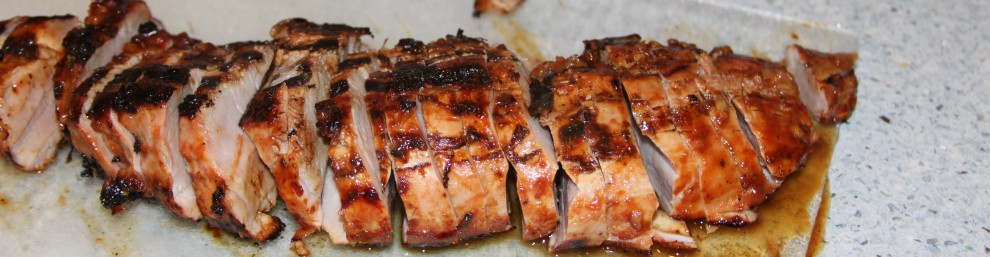
New Year’s Day we had the best pork we can remember, and I made it (does anyone remember the “Shake ‘n Bake” commercials from 70’s?)! How that’s for braggin’? Well…was it really me, or was it the brine? “We” made a brined pork loin which was absolutely fantastic, and highlighted by great flavoring, incredible moistness and a very evident smoke ring (more later).
As an admitted “brinaholic” I have already dedicated two posts to the process; one on brined turkey and another on brined pork chops. Brining is the process of soaking meat or vegetables in a saltwater and/or seasoned water bath, and has been around for centuries to preserve meats when refrigeration wasn’t available. Brining is best for lean meats such as poultry (chicken, Cornish hens, turkey), pork (roasts, tenderloin, chops) and shrimp that tend to be mild flavored, more easily over-cooked and prone to drying out.
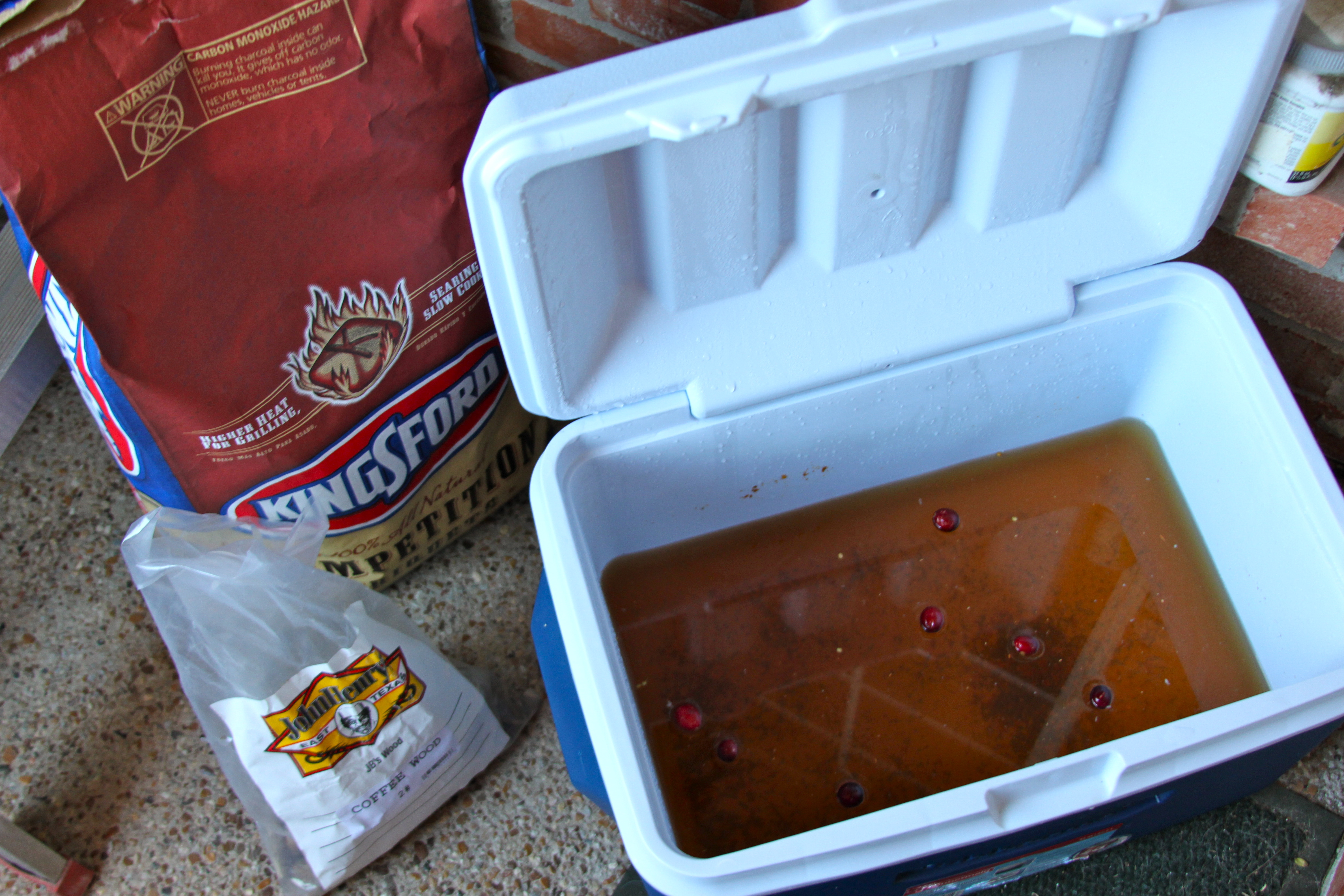
I concocted a “best of” brine New Years’s Eve morning in my new dedicated brining cooler (perfectly sized for a 15 lbs. turkey). The brine included:
2 gallons water
1 12 oz. UFO Hefeweizen (wheat) beer
1 cup kosher salt
3 TBSP molasses
3 TBSP Malabar Table Grind Black Pepper (store brand will work too)
1 TBSP crushed red pepper
4 bay leaves
Ice cubes
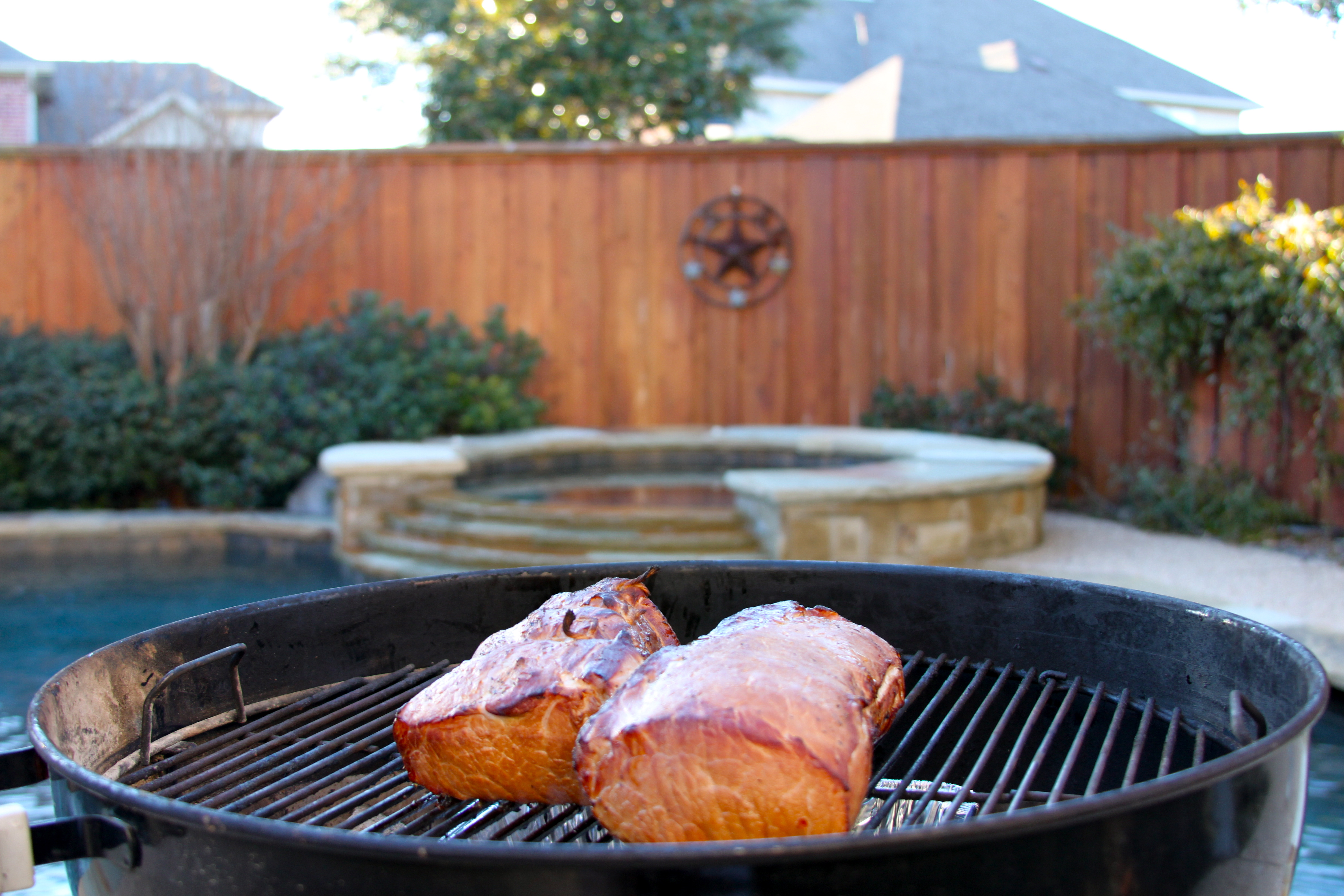
A 3 lbs. pork loin was put in the brine for 24 hours. The next afternoon I fired up the trusty Weber kettle grill. The pork was placed center grill at 2:00 with charcoal and coffee wood burning in the side rails. The vents were opened about half way.
I basted the pork at one hour with olive oil. At 1 and 1/2 hours I put the pork in a throw away pan with a 12 oz UFO Hefeweizen. The pan was sealed with aluminum foil and the vents were closed. In another hour I brought the pan inside to allow the meat to rest, as they say. The meat was still warm and moist when I carved and served it at 5:45.
So what is a smoke ring? A smoke ring is a pink discoloration of meat just under the surface crust (called bark). It can be just a thin line of pink or a rather thick layer. The smoke rings is caused by nitric acid building up in the surface of meat, absorbed from the surface. This nitric acid is formed when nitrogen dioxide from wood combustion in smoke mixes with water in the meat. Basically it is a chemical reaction between the smoke and the meat.
Filed under Brine, grill, Indirect, Kingsford, Uncategorized
Lee’s Ginger Ale Ham
Lee Henderson is my bestest BBQ buddy. We met 15 years ago when our daughters played recreational soccer together in the PYSA, and live five blocks apart in our neighborhood, the Highlands of Plano Prestonridge. Born and reared in Pittsburgh, Lee spends his Sunday’s worshiping and watching the Steelers with fellow fans at The Venue, in Fairview, TX. He is quite handy around the house, in the yard and on the grill. His backyard is known as “Lee World” and he has the cleanest epoxy coated garage floor in the ‘hood.
We traditionally do Thanksgiving dinner at the Henderson house and Christmas dinner at our house. Lee always does a ginger ale ham, while I do a brined turkey. I will chronicle my brined bird in the next update of King of the Que.
Lee starts off with a ten lbs. bone-in butt ham. In a large pot he simmers four two-liter bottles of ginger ale, one cup of brown sugar and a quarter cup of worchestershire sauce. After allowing the mixture to cool, he puts the ham in the mix, and refrigerates it overnight.
The next day he cooks the ham over low, indirect heat on his gas grill for eight, or so, hours. The ham is placed on a grate over top a throw-away serving pan filled with the ginger ale solution (see picture), which also serves as a baste.
Filed under grill, Indirect, Marinade, Uncategorized
 King OF The 'Que